

What is an echocardiogram?
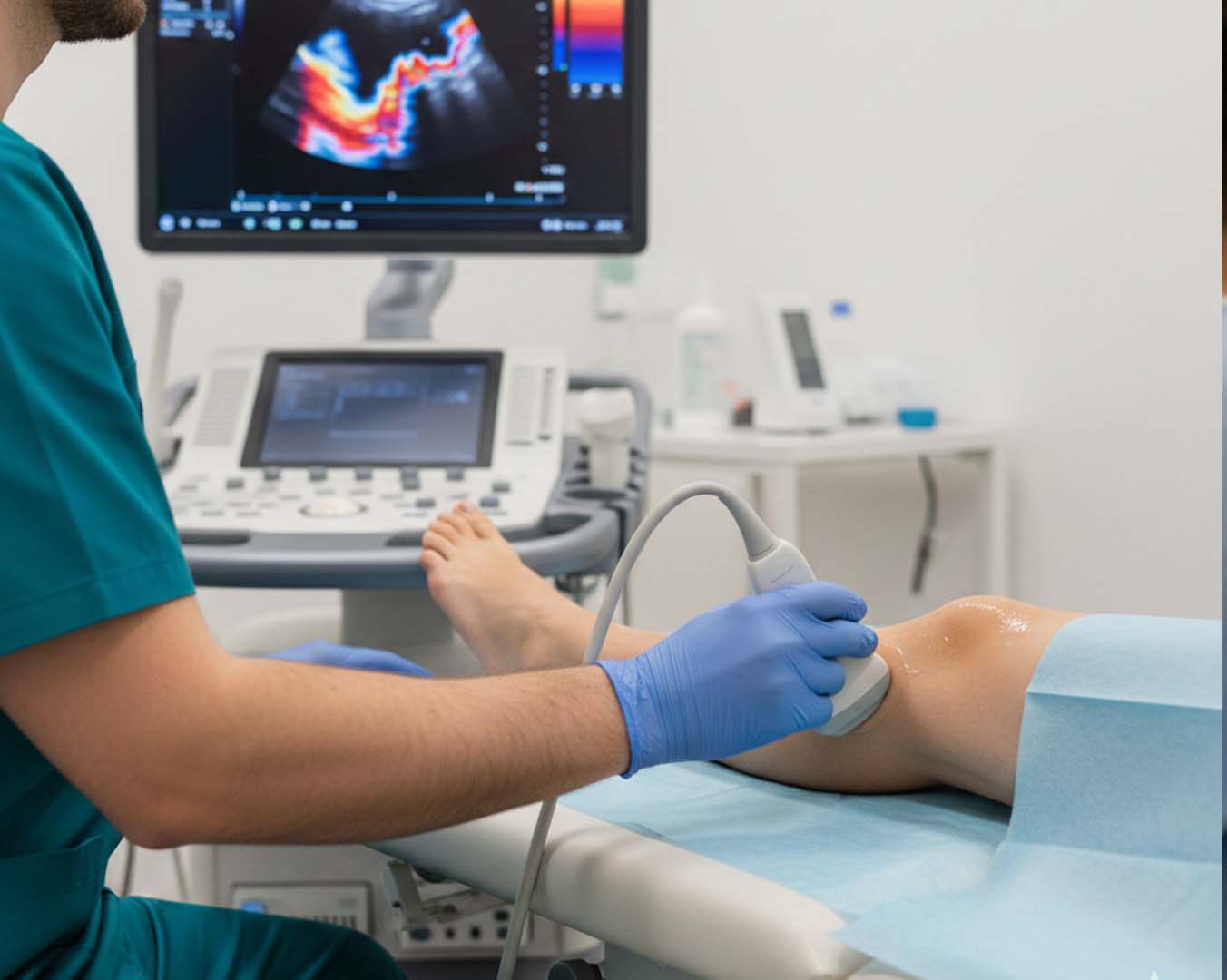
An echocardiogram, or echo, is an ultrasound examination of the heart. Gel is applied to the chest and a transducer is moved across the skin to capture moving images and selected blood-flow measurements.
A standard transthoracic echo may identify findings associated with valve disease, reduced pumping function, cardiomyopathy, chamber enlargement and some congenital or structural abnormalities.
What is an ECG test?
An electrocardiogram records the heart's electrical activity. Small adhesive electrodes are placed on the chest and limbs and connected to the ECG machine for a short recording.
A resting ECG may show a fast, slow or irregular rhythm, electrical-conduction changes or patterns that need further clinical assessment. It does not send electricity into the body.
What can echo and ECG tests help assess?
The tests are complementary: an echo looks mainly at structure and function, while an ECG records electrical activity.
- Heart chamber size and wall thickness
- Heart-muscle contraction and pumping function
- Valve structure and function
- Selected blood-flow information on echo
- Heart rate and rhythm during the ECG
- Electrical-conduction patterns
- Findings that support further cardiac investigation
What are the limitations of echo and ECG?
A resting ECG is a short snapshot and may miss an intermittent rhythm problem. Ambulatory monitoring or other tests may be needed when symptoms come and go.
A standard echo does not directly show blocked coronary arteries and cannot rule out every cause of chest pain, palpitations, breathlessness or fainting. Results must be interpreted with symptoms, examination and other tests.
How to prepare for an echo or ECG
No special preparation is usually required for a resting ECG or standard transthoracic echo. Wear clothing that allows access to the chest and avoid body lotion or oils on the day because they can affect electrode contact.
Follow any individual instructions provided with the booking and bring relevant medication details, referral information or previous cardiac reports if available.
What to expect on the day
The clinician will explain the test and obtain consent. For an echo, you will usually lie partly on your side while images are taken from several chest positions. For an ECG, electrodes are attached to the chest and limbs for a brief recording.
A combined appointment typically takes around 20 to 30 minutes. The clinic will confirm the duration for the exact test or combination booked.
Getting your results
The recordings and images are reviewed and a report is prepared. The clinic will confirm who performs and reports each test, how results are delivered and the reporting timetable.
A concerning result may require GP review, urgent medical assessment, cardiology referral or additional testing. A normal result does not override ongoing or worsening symptoms.